

RCC,MACP.
About Tanisha Basra
Registered Clinical Counsellor (#25481)
Hi, I'm Tanisha.
You got through the call. You finished your shift. You made it home. So why does your body still feel like it's bracing for the next emergency?
You're exhausted, but the moment your head hits the pillow, you're wide awake. Your body feels restless, your mind won't slow down, and just when everything gets quiet, you're hearing that voice again or reliving a moment you thought you'd left behind.
You can stay calm through someone's most difficult moments, but when your partner asks a simple question, you snap. Sometimes you're overwhelmed by everything, and other times, you barely feel anything at all. You love your family. So why does it feel like they get the version of you that has nothing left to give?
You thought time off would help. But the days off came and went, and nothing has changed. You're starting to wonder if things will ever feel different.
I work with first responders and emergency dispatchers who can end the call or leave the scene, but can't always leave what happened behind. Having worked as a 911 operator, I understand the pressure to stay composed and move on before you've had a moment to process what happened. I use mind-body techniques to help you understand what's beneath your reactions and recognize when stress is building before it turns into another sleepless night or a reaction you wish you could take back.
You've spent so much time responding to everyone else's emergencies. Your own well-being shouldn't become one before it matters, too.
You walk through your front door, and for once, the weight of your shift doesn't follow you inside. You close your eyes, and the calls don't come rushing back. You can let the day be over.
Your partner asks you a question, and it no longer feels like the one thing that might push you over the edge. You're sitting with the people you love, and your mind is right there with them. You make plans with friends and look forward to going, instead of worrying about anxiety taking over. Your days off become time to enjoy, not just time to recover before the next shift.
You can be there for people on their worst days without losing the best parts of your own life.
Clinical Hours
Tuesday: 2:00 PM – 7:00 PM
Friday: 2:00 PM – 7:00 PM
Saturday: 12:00 PM – 4:00 PM
Specialties
First Responders & Emergency dispatchers
Grief & Loss
Anxious Attachment
Modalities
Relational & Attachment Therapy
Psychodynamic Therapy
Narrative Therapy
Education
Beyond the Bio
Because therapy is human & so are we.

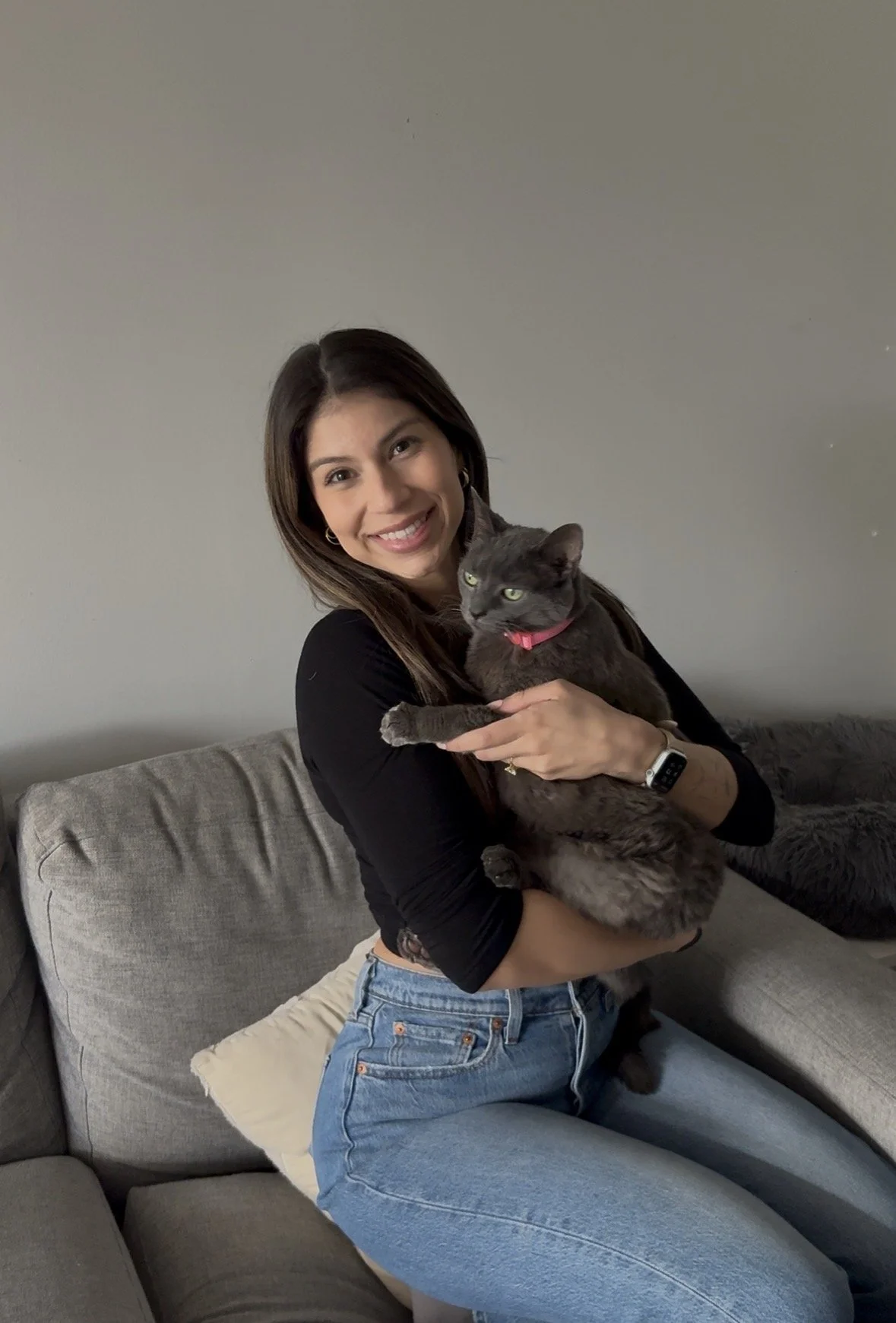
Melo's Favourite Auntie (Self-Proclaimed)
My fur-nephew hasn't confirmed the title, but I'm running with it.
My Personality in Four Albums
Please don't make me rank them.

Passport Under Construction
Slowly adding new places and memories along the way.
Grand Canyon, Arizona — pictures really don't do it justice.
Who I Work With
-
Police officers, firefighters, paramedics, 911 call takers, and emergency dispatchers who spend
their shifts responding to other people's emergencies. Maybe you're burnt out, constantly on
edge, or noticing that work stress is spilling into your relationships and the parts of your life you
used to enjoy. You're used to managing difficult situations, but it's getting harder to manage how
those experiences are affecting you.
-
You've lost a parent, partner, or someone else you love, and life hasn't felt the same since.
Maybe you're going through the motions while everyone else seems to have moved on. Some
days you're overwhelmed by sadness, anger, or guilt; other days, you feel nothing at all. You
want to find a way forward without feeling like you're leaving them behind.
-
You replay conversations, worry about the slightest change in tone, or find yourself needing
reassurance that everything is okay. Maybe you struggle to set boundaries or put others' needs
before your own because you're afraid of losing them. Even when you recognize these patterns,
they're hard to change.You're tired of feeling anxious in relationships you want to feel safe in.
-
Maybe you've gone through a breakup, changed careers, or experienced something unexpected that left you feeling like you've lost a part of yourself. Life doesn't look quite how you imagined, and while everyone around you seems to be moving forward, you're left wondering who you are now and what comes next.
How I Work
I draw from a range of approaches depending on what you actually need.
-
Our early relationships can shape our adult connection style. Maybe a small change in someone's tone leaves you worried they'll leave, or you find yourself holding back your needs or pulling away when someone gets close. Together, we gently explore what's behind these patterns so you can feel more secure in your relationships.
-
Sometimes our reactions feel bigger than the moment itself. Maybe you feel guilty saying no, shut down when overwhelmed, or keep pushing yourself even when you're exhausted. We explore the deeper, often unconscious patterns behind these reactions so you can better understand yourself and find new ways to respond.
-
The stories we carry about ourselves often take shape long before we learn to question them. Maybe you've come to believe you're not good enough, that you always have to be the strong one, or that putting yourself first is selfish. Over time, these messages can become your inner voice, shaping how you see yourself and what you believe you deserve. Sometimes, understanding the story is where we begin to change it.
What to Expect in Sessions
-
You don't have to walk into therapy knowing exactly what's wrong or how to explain it. Maybe you've spent so much time trying to understand, manage, or push through your feelings that you haven't had the chance to really experience them. We can slow down, sit with what's coming up, and give those feelings space without rushing to make sense of everything.
-
I'm genuinely curious about your world, and I don't pretend to have all the answers. I'll listen, ask thoughtful questions, share what I notice, and gently challenge you when it might help. There's room for honest conversations, quiet moments, and even laughter. You're not a problem I'm here to fix. You're a person I want to understand.
-
Not everything you're carrying shows up as a thought. Sometimes it's a jaw that won't unclench, shoulders that won't relax, or feeling on edge even when everything around you is quiet. Alongside talking things through, we'll pay attention to these signals and explore grounding and body-awareness techniques. Because understanding why you're on edge isn't always the same as being able to let your guard down.
Are you feeling stuck in old patterns or overwhelmed by the demands of relationships, work, or your own expectations?
Are you hoping for change but find yourself weighed down by anxiety, confusion, or emotional exhaustion?
FAQs
Many first responders and dispatchers tell me, “I stay calm with strangers on their worst day, so why do I snap at my partner over nothing?” Often it’s because you’ve spent every ounce of patience at work, and home is the one place your guard comes down. The irritability can also be a sign that stress is building in your body. Together we look at what’s underneath those reactions and how to notice them earlier, so you’re less likely to say something you regret.
Why do I snap at my partner when I’m calm at work?
1
Why do I need constant reassurance, and is something wrong with me?
2
Nothing is wrong with you. If you need constant reassurance that everything is okay, it usually means closeness doesn’t feel fully safe yet, so you keep checking. The trouble is that reassurance tends to wear off quickly, and then you’re back to wondering. I won’t tell you to just stop asking. We look at what the need is protecting, and you build a steadier sense of security from the inside, so you rely less on someone else to give it to you.
Why do I always need my partner to tell me everything is okay?
3
There’s nothing wrong with you. If you always need someone to say everything is okay, it usually means closeness doesn’t feel totally safe yet, so you keep checking. The problem is that reassurance wears off fast, and then you’re right back to worrying. I won’t tell you to just stop asking. We work on helping you feel steady on your own, so you don’t need someone else to calm you down every time.
Why can’t I sleep after work even though I’m exhausted?
4
If you can’t sleep after work even though you’re exhausted, your body is still acting like the emergency is happening. At work, you have to stay alert and push your feelings aside, and that doesn’t shut off when your shift ends. In session, we pay attention to what your body is holding onto, like tight shoulders, a clenched jaw, or that restless feeling at night. We practice ways to help your body slow down, so bedtime stops feeling like another call you can’t hang up on.
Why does everyone else seem to have their life figured out while I’m starting over?
5
When everyone else seems to be moving forward and you feel stuck or behind, it’s easy to think something is wrong with you. Most people are not as far along as they look online or at family dinners. Starting over, whether it’s after a layoff, a breakup, or a change in plans, is hard and lonely. We slow things down, figure out what you actually want instead of what you think you should want, and take the next step from there.
